You've accidentally trained your brain many times. Now do it on purpose.
Your attention radar has an outsized effect on your overall mental/emotional health.

I bought a Nissan SUV four years ago. Black, with premium wheels and shiny with extra trim, it caught my attention immediately. I haven’t seen many of these, I thought. I liked the idea of driving a uniquely stylized vehicle—and it’s a Nissan. If I take care of it, I can drive it to at least 200K. I drove it home less than two hours after first viewing it, proud to own such a dashing SUV.
Within a week, I’d seen three exactly like it.
That’s a window into neuroplasticity, the idea that your brain changes in response to what you ‘feed’ it—including life experiences, your current environment, your mood—even the thoughts you think.
Prior to the purchase, I’d probably seen dozens of identical vehicles, taking no particular notice of them. Afterwards, I couldn’t stop noticing, because it took less than two hours to accidentally hack my RAS.
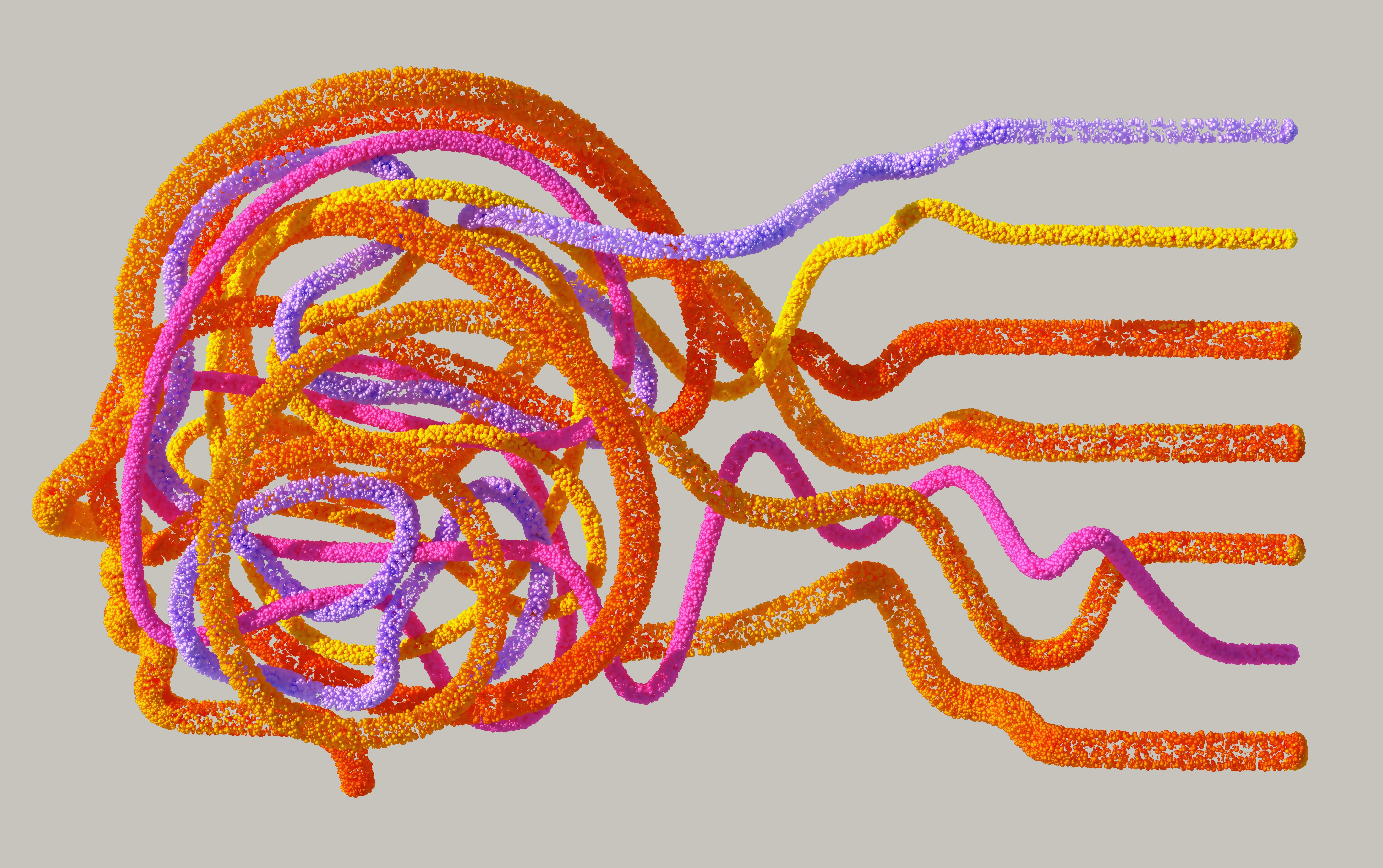
The Reticular Activating System (RAS) is a collection of neurons at the base of the brain stem that function as your relevance radar. The RAS works ‘round-the-clock, even when you’re asleep. It silently, subconsciously scans all incoming input for critical information and is especially sensitive to input indicating danger. It decides what’s important and what your attention can ‘let go.’
Good thing. According to research, we are bombarded with over 11 million bits of sensory input per second; about 10 million of those are for visual information alone.
Our conscious minds can only handle about 50 of those bits per second—that’s about 0.0005% of the total sensory deluge we experience each moment. Without the RAS, we’d be overwhelmed instantly, likely unable to even function. The RAS has a very important job!
The good news? Research reveals you can ‘nudge’ your RAS using varied techniques:
Intentionally-prioritized thoughts also become prioritized within the RAS. The earlier SUV purchase is one example of this type—before the purchase, I couldn’t have cared less about black Nissan SUVs—afterward, I subconsciously and constantly scanned for the body shape and color while driving. Why? Because I told my RAS that Nissans like mine were important, so it sought out and fed that prioritized information to me.
Mindfulness meditation improves cognitive filtering, sustained attention, and emotional regulation—all core functions of the RAS.
Some Specific, Practical Applications
You can use intentional prioritizing and meditation to:
increase your attention span—
Meditation is not a supernatural experience, but a natural physiological/affective state that is known to increase focus over time.
change how you respond to disappointment or frustration or sadness or—
Try this to intentionally prioritize awareness of those feelings. When you feel frustrated, internally say to yourself I feel frustrated right now, but I know that’s an emotion that will pass. It doesn’t remove the stimulus that inspired the frustration, but you’ll be less likely to react to it, leaving more room for constructive problem-solving. And notice the difference between the above statement and I’m frustrated. No—frustration isn’t who you are, it’s just what you’re feeling. See the difference?
Do this repeatedly and watch your tendency to feel frustration (or disappointment, or sadness, etc.) decrease over time. You’re replacing reactivity with mindfulness.
solve a problem at work—
Intentionally prioritize the problem by reviewing pertinent data, immersing yourself in relevant case studies, visualizing successful outcomes, and carrying a notepad for ideas.
By ‘deep-diving’ into the problem in a multi-focused way, you’re flooding your RAS with the message this is really important to me. Don’t be surprised when a solution appears!
“The practical implication is real: what you consciously prioritize actually does change what your brain notices.” -AJ Keller via Neurosity
Learn more in AJ Keller’s fascinating article on Neurosity.
Thank you for reading!
This is but one example of how applied science can improve our life outcomes by growing Emotional Competence (EC). EC is the fundamental success skill and the most direct path to personal/professional growth.